Paradox Rift
A VR puzzle game built on one rule: objects moved in the past move to the same place in the present.
September 2023 — January 2024
A VR puzzle game built on one rule: objects moved in the past move to the same place in the present.
September 2023 — January 2024
Paradox Rift is a VR puzzle game built around a single rule: any object moved in the past moves to the same location in the present. Set on an abandoned spaceship where time rifts have started tearing through the hull, the player has to exploit that past-present link to navigate and solve puzzles across both timelines.
Traversal alternates between the past and present timeline through in-world time portals. Puzzles are built around the causal link between them — an object repositioned in the past appears in that same spot in the present, so solving a room usually means figuring out which timeline to manipulate an object in before crossing over.
XR Rig Configuration Configured the XR Rig to support both teleportation and smooth locomotion, letting players pick a comfort mode without level design needing to account for only one movement type.
VR Input Systems Built VR input handling for object grabbing and environment interaction using Unity's XR Interaction Toolkit, mapping controller input to context-specific actions depending on what the player is pointing at or holding.
Character Controller Development: Built the VR character controller with collision detection and physics-based movement, tuned to avoid the disorientation and clipping issues common in first-person VR locomotion.
Grabbable Object System Built the grabbable-object system every puzzle interaction routes through — pickup, hold, and release logic shared across every interactable object instead of reimplemented per object.
Teleportation System Built a teleportation system using custom trigger volumes and anchor points, giving level designers control over exactly where players can and can't teleport within a puzzle room.
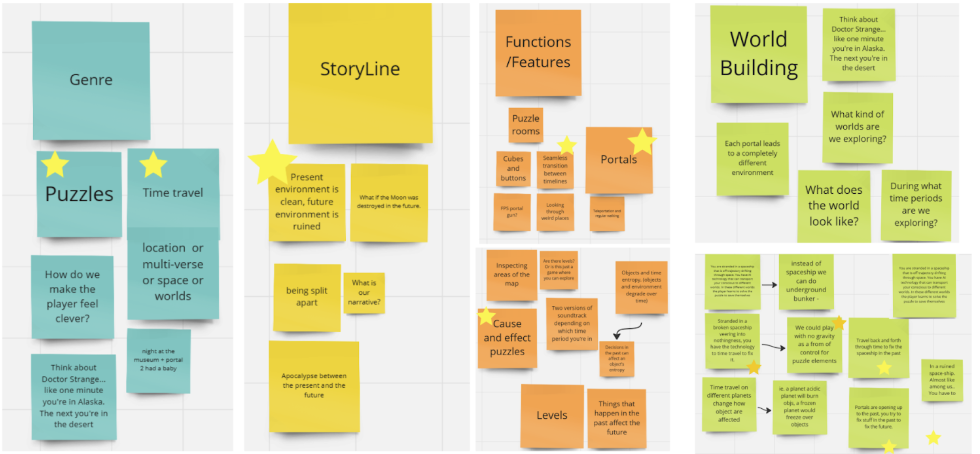
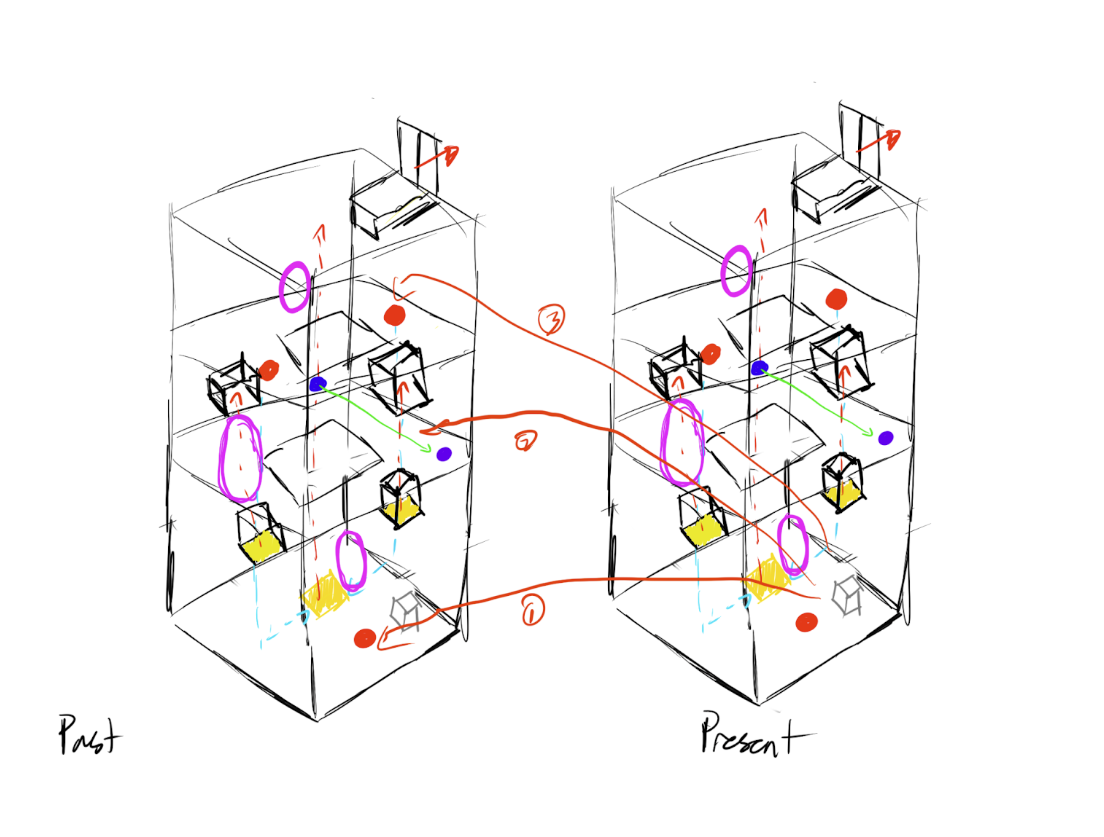
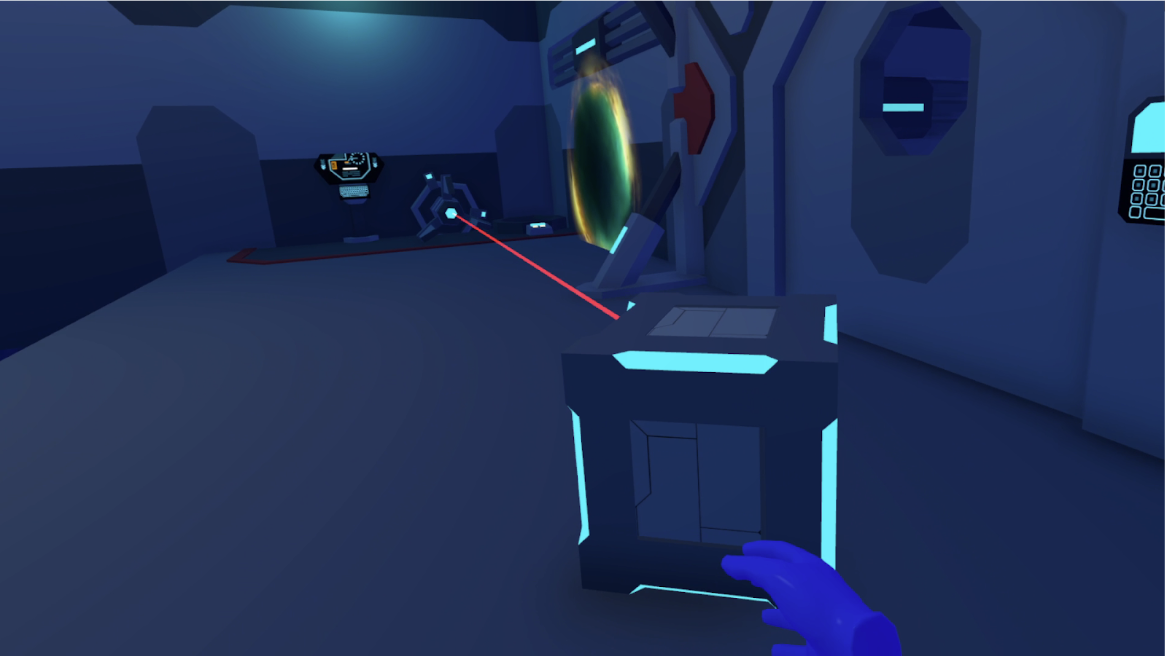
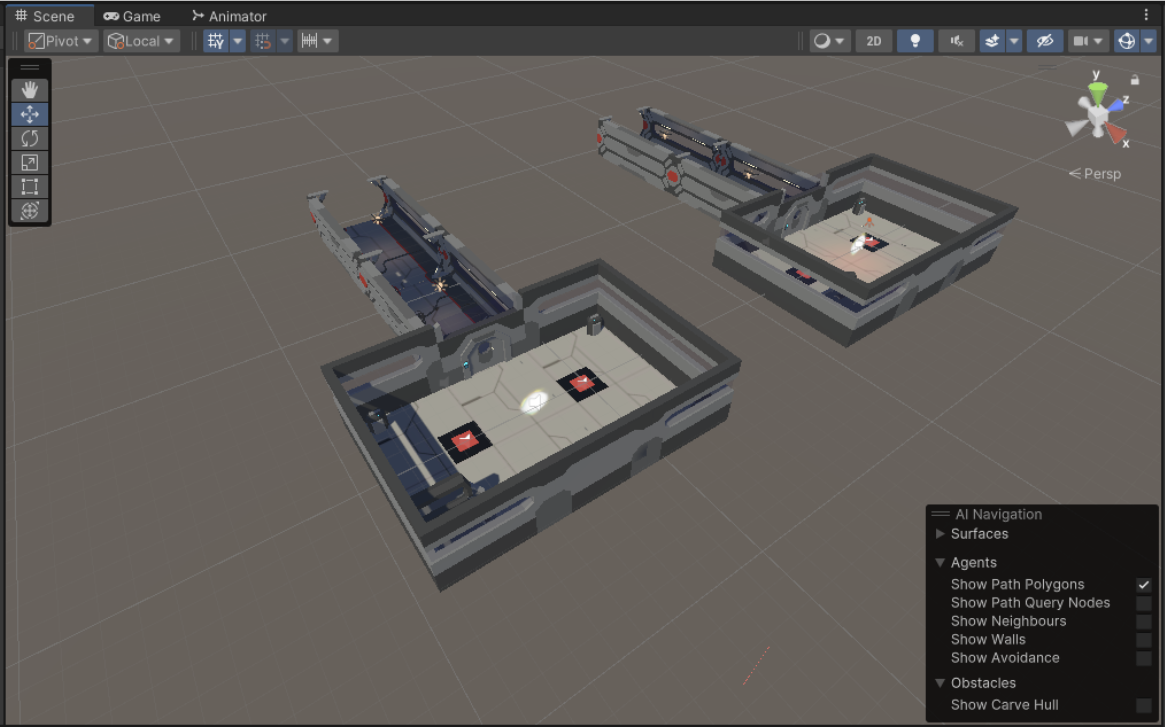
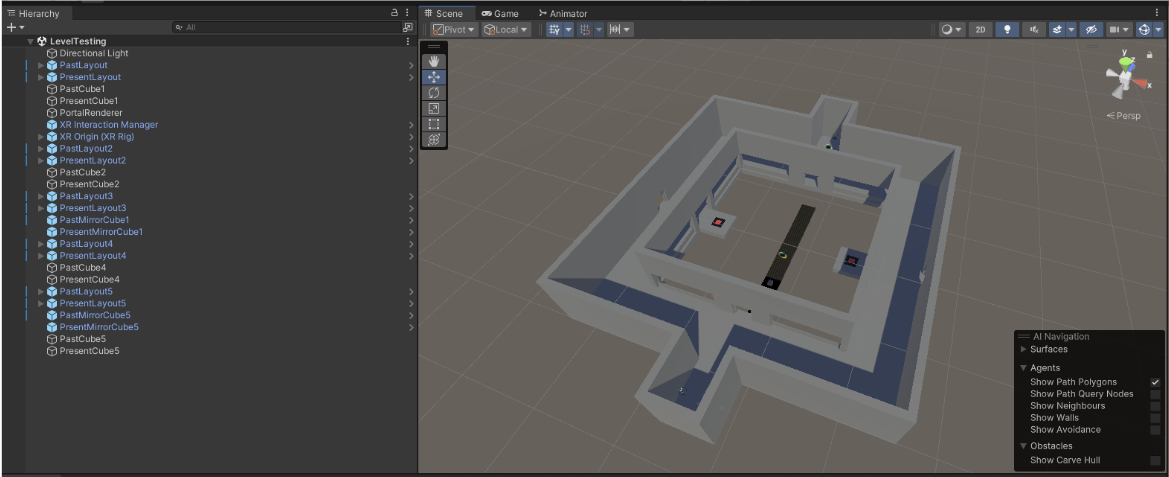
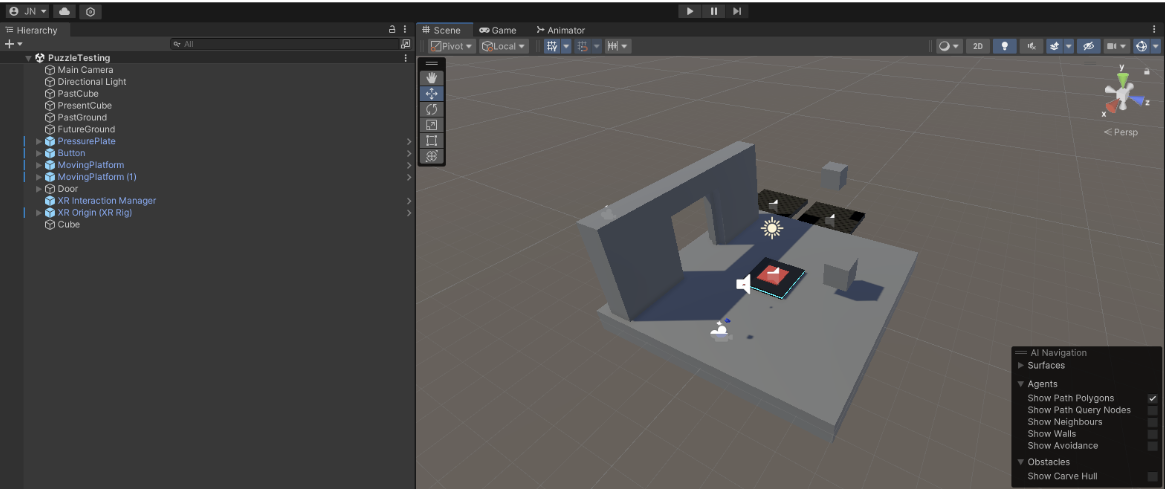
We started by dumping ideas onto a Miro board and narrowing down to the mechanics that made the game unique, then sketched concept levels and locked the core rules, which became the basis for everything after. Once the rules were set, we prototyped every mechanic in isolated test scenes before building any real levels, then moved into level design and blockouts in Unity to confirm the puzzles actually worked before investing in art. After finishing two level layouts for the first showcase, playtester feedback on level 2's layout led us to rework it and apply the same fixes across the remaining levels, along with adding sound effects and better interaction feedback for the final pass.
The main challenge was teaching the past-present mechanic without breaking immersion with a tutorial popup. Early playtests showed most players couldn't parse the cause-and-effect link between timelines, especially with no audio feedback confirming an action had worked. We fixed this with in-world diegetic voice-over introducing each mechanic through the narrative, plus visual guide lines connecting an action in one timeline to its effect in the other. We also moved portals from floating mid-air to wall-mounted positions and reduced visual clutter around them, which fixed a navigation problem we'd seen in every single early playtester.